Praise in Public, Criticize in Private
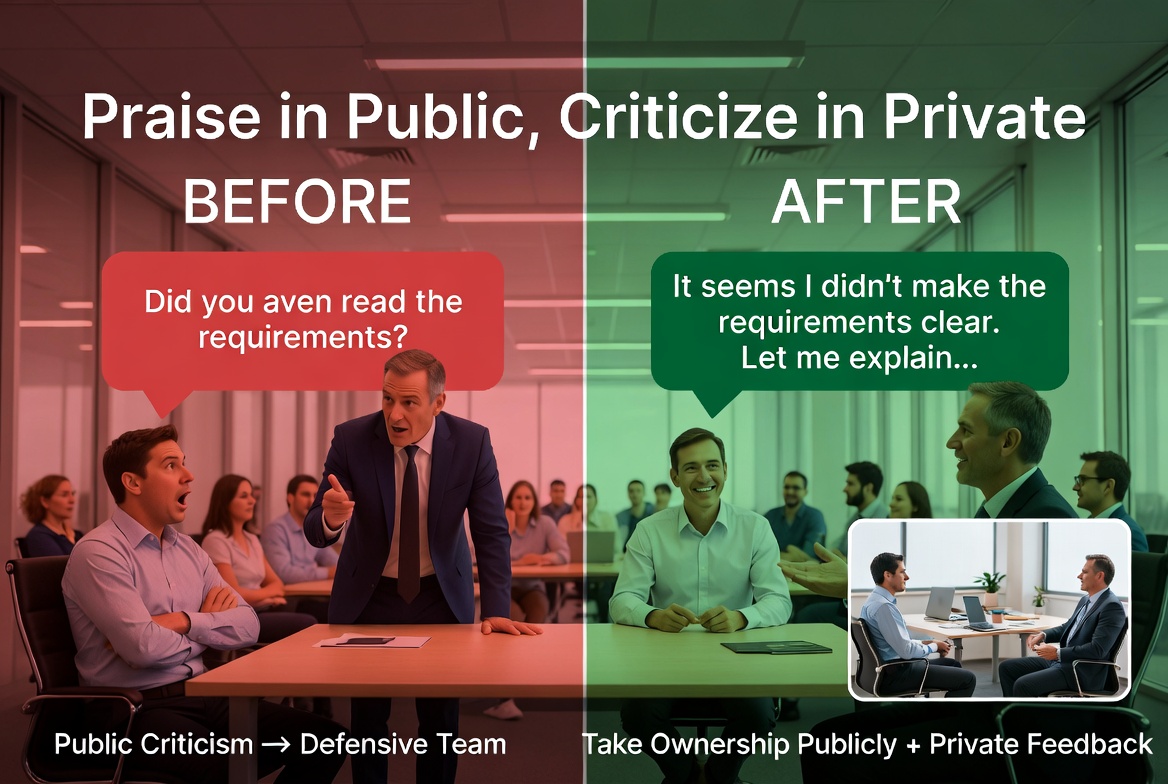
A well known management adage states, "Praise in public, punish in private." Alliterative phrases are memorable, and this one should not only be remembered but also practiced by people leaders. The word "punish" creates the alliteration with "public," yet a more accurate term for the desired leadership behavior is "criticize." Feedback delivered in public should remain positive. When negative feedback becomes necessary, leaders should provide it in a one on one setting.
Let me give you some examples where a leader did not follow this advice and how I think the situation should have been addressed.
In a project progress meeting, an engineer presented a new feature that did not align with the requirements written by a senior member of the leadership team. The leader responded with the question, “Did you read the requirements in the ticket?” This question immediately placed the engineer on the defensive because it implied criticism that the engineer had not read the requirements. A more effective response would have been, “It seems that I did not make the requirements clear. Let me explain what I intended.” This approach shifts the focus away from blaming the engineer and toward the leader’s responsibility. After the meeting, the leader could address the situation in a one on one conversation by highlighting the importance of engineers asking clarifying questions directly with the requirement author.
Another example occurred during a meeting with stakeholders. I explained that a project was running late due to unexpected complexity. Another leader interjected, “The problem is that the engineer [name] is slow and does not get much done.” Even if this assessment were accurate, it remains unacceptable to criticize team members in meetings where they cannot defend themselves. I responded by clarifying that the delay stemmed from additional work discovered during development, not from any lack of diligence on the part of the engineer, who had been working effectively. The leader should have reached out to me privately to raise any concerns about the engineer’s performance.
When in meetings, always think about how to provide feedback that is not critical or negative. If the situation makes it impossible to do it, then arrange a private meeting to provide the criticisms. I had an engineer who presented a solution that was over-engineered for our current needs; he had tried to future-proof it. Rather than say to hm “This is over-complicated”, I said: “We need to move quickly on this feature, can we pare the design down to what is needed right now. Sorry, I did make that clear in the requirements. We can then use your better solution, if the feature is a success and we need to support a wider set of customers and needs,”
Mastering the principle of praising in public and criticizing in private stands as one of the most effective habits available to people leaders. This approach protects the dignity of team members, reduces defensiveness, and cultivates a culture of trust, respect, and psychological safety. The examples shared above illustrate how small shifts in the delivery of feedback can prevent unnecessary conflict and transform potential setbacks into opportunities for growth and collaboration. Leaders who consistently apply this practice not only strengthen individual performance but also build high performing teams that thrive on open communication and mutual respect. Start implementing this simple discipline today and observe the lasting positive impact it creates on team morale and results.